NEW YORK (AP) — Scientists have uncovered the mummified remains of cheetahs from caves in northern Saudi Arabia.
The remains range from 130 years old to over 1,800 years old. Researchers excavated seven mummies along with the bones of 54 other cheetahs from a site near the city of Arar.
Mummification prevents decay by preserving dead bodies. Egypt's mummies are the most well-known, but the process can also happen naturally in places like glacier ice, desert sands and bog sludge.
The new large cat mummies have cloudy eyes and shriveled limbs, resembling dried-out husks.
“It’s something that I’ve never seen before,” said Joan Madurell-Malapeira with the University of Florence in Italy, who was not involved with the discovery.
Researchers aren’t sure how exactly these new cats got mummified, but the caves’ dry conditions and stable temperature could have played a role, according to the new study published Thursday in the journal Communications Earth and Environment.
They also don't know why so many cheetahs were in the caves. It could have been a denning site where mothers birthed and raised their young.
Scientists have uncovered the rare mummified remains of other felines, including a saber-toothed cat cub in Russia.
It's uncommon for large mammals to be preserved to this degree. Besides being in the right environment, the carcasses also have to avoid becoming a snack for hungry scavengers like birds and hyenas.
To find such intact evidence of cheetahs that lived long ago in this part of the world is “entirely without precedent,” study author Ahmed Boug with the National Center for Wildlife in Saudi Arabia said in an email.
Cheetahs once roamed across most of Africa and parts of Asia, but now live in just 9% of their previous range and haven't been spotted across the Arabian Peninsula for decades. That’s likely due to habitat loss, unregulated hunting and lack of prey, among other factors.
In a first for naturally mummified large cats, scientists were also able to peek at the cheetahs' genes and found that the remains were most similar to modern-day cheetahs from Asia and northwest Africa. That information could help with future efforts to reintroduce the cats to places they no longer live.
___
The Associated Press Health and Science Department receives support from the Howard Hughes Medical Institute’s Department of Science Education and the Robert Wood Johnson Foundation. The AP is solely responsible for all content.
latest_posts
- 1
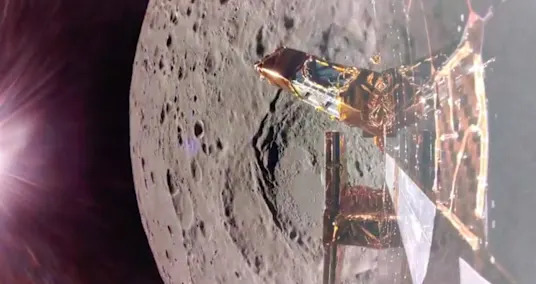
 1st results from Blue Ghost lunar lander reveal how much we still don't know about the moon
 - 2Former Israeli judge does not expect Netanyahu to be pardoned
- 3Former defense minister Gallant vacated home over security threat under Shin Bet direction
- 4Beating Scholastic Difficulties: Understudy Examples of overcoming adversity
- 5The Developing Nearby Food Development and Its Advantages



- The most effective method to Pick A Trade-in vehicle Stage
- Warnings rise for U.S. as severe flu strain causes outbreaks in Canada, U.K.
- CRP Subsea secures contract for Vattenfall’s Nordlicht I cable systems
- German Winemakers Rewrite The Rules Of Riesling In A Warming World
- Former IRGC child executioner tells ‘Post’ how he became devout Christian dissident
- Hezbollah rockets hit 165 UNIFIL positions in Lebanon while targeting Israel, IDF reveals
- A Manual for Pick Great Lawful Discussion Administrations For New businesses In 2024
- Visiting This Japanese City Just Got A Little More Expensive (Here's What Travelers Should Know)
- Instructions to Shield Your Gold Speculation from Possible Dangers: Fundamental Protections