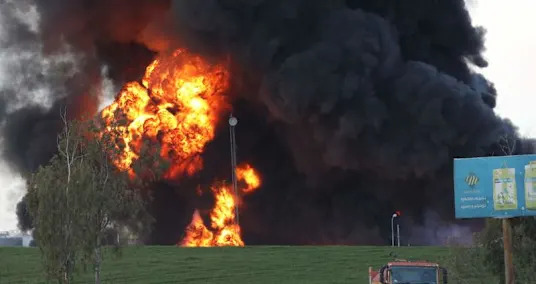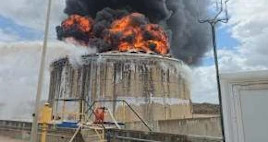

According to the findings, the targeted sites were divided into three categories based on their strategic importance.
Russian intelligence has provided Iran with a detailed list of 55 critical energy infrastructure targets within Israel, according to information obtained by The Jerusalem Post from a source close to Ukrainian intelligence.
The report, which highlights the deepening military and intelligence cooperation between Moscow and Tehran, suggests that the information that was shared enables Iran to launch precision missile strikes againstIsrael’s energy grid.
According to the findings, the targeted sites are divided into three categories based on their strategic importance:
Level 1: Critical production facilities. These are sites whose destruction would cripple the national energy system. The report specifically names the Orot Rabin power station as a primary target.
Level 2: Major urban and industrial energy hubs. These facilities are located primarily in central Israel and serve large population centers.

Level 3: Local infrastructure. These targets include regional substations that support industrial zones and smaller power plants.
The Russian assessment regarding Israel’s vulnerability is that “unlike many European nations, Israel’s power grid is characterized by a high degree of isolation”. Because Israel is an “energy island” that does not import electricity from neighboring countries, Russian intelligence reportedly told Iran that damaging even a few central components could trigger a total and prolonged energy collapse, leading to mass blackouts and technical failures that could not be easily mitigated.
Zelensky warns of growing Russia-Iran alliance
Ukrainian President Volodymyr Zelensky has grown increasingly vocal about the Russia-Iran alliance, warning that the “knowledge” Russia has gained on the battlefields of Ukraine is being exported to the Middle East.
“The Russians also helped them, like the Iranians helped [Russia] at the beginning of the war when they gave them Shaheds,” Zelensky told the Post in an interview two weeks ago. “They gained big knowledge on the battlefield and this impacting and will have an impact on other regions.”
Zelensky further claimed that Russia has begun providing Iran with Shahed-style drones manufactured on Russian soil. He alleged in an interview with the Post that “Russian components” were discovered in a drone recently downed in a Middle Eastern country, though he declined to name the specific location for security reasons.
“We saw some components; they had Russian details. We know it because Iranians didn’t produce it,” the President stated.
However, Ukrainian officials maintain that the motive behind the intelligence transfer is twofold: to embolden its primary ally in the region and to create a fresh crisis in the Middle East that would divert international attention and resources away from the war in Ukraine.
Russian ambassador Anatoly Viktorov responded to the allegations, stating, “Russia and Israel established contacts to discuss national security issues long ago. These contacts have been intensively maintained between relevant Russian and Israeli agencies. The most pressing issues have been discussed at the highest level. We value track record which has been accumulated in this area.
“Representatives of the Russian political leadership have repeatedly dissented from the ‘accusations’ that our country allegedly provides intelligence data to Iran,” he added.
latest_posts



 'Israel has the right to continue its attacks,' Lebanese Foreign Minister announces
- Iranian-linked drone attack kills Kurdish couple in northern Iraq
- Jesse Jackson hospitalized, under observation for a neurodegenerative condition
- Windows to the Previous: An Excursion Through the World's Notable Engineering
- Meet the rescue team behind the astronauts as Artemis II's launch approaches
- Instructions to Distinguish the Wellbeing Dangers Related with 5G Pinnacles
- Purchases of iPhone 17 Pro soar across Gaza amid 'limited' humanitarian aid
- Full SNAP benefits must be paid ‘promptly,’ USDA tells states as government reopens
- Thyssenkrupp to suspend electrical steel production at French site